
See How Gender Bias May Be Affecting Your Resume
If you've been applying to roles you're qualified for and not hearing back, your resume may not be protecting you from the gender bias built into hiring systems.
Start Your Free Gender-Bias Aware Resume Review
See where gender bias may be affecting your resume and follow the guidance to share your value in ways that are hard for any hiring system to overlook.
By subscribing, you consent to receive messages from Darling Resumes, including the free resource. See our Privacy Policy. Unsubscribe anytime.
FIND OUT HOW GENDER BIAS MAY BE AFFECTING YOUR RESUME
In a process shaped by automated filters, gender bias, subjective evaluations, and high pressure time constraints, women need resumes that demonstrate their value through evidence of their impact to claim the roles they deserve.
The Free Resume Impact Review for Women shows you where gender bias may be affecting your resume and how to show evidence of what you actually achieved so your value is hard to overlook and you get the role you deserve.
Get the Free Resume Impact Review for Women
Your free Resume Impact Review includes:
A sophisticated AI-guided review that identifies impact, outcomes, and leadership signals you may be underselling and gives you specific guidance on how to reframe them, with the benefit of an external, objective lens.
A practical guide and self-assessment checklist to evaluate how your work experience communicates impact (perfect for those who prefer not to use AI)
Start Your Free Resume Review
Get the Free Resume Review Designed Specifically for Women
By subscribing, you consent to receive messages from Darling Resumes, including the free resource. See our Privacy Policy. Unsubscribe anytime.
THE REAL REASON WOMEN'S VALUE GETS MISSED IN HIRING
Women are often among the most qualified candidates, bringing deep expertise, strong problem-solving abilities, and a track record of delivering tangible results. Yet their experience often fails to hold the same weight as their male counterparts in the hiring process.
This is the result of systemic bias in resume screening systems as well as the gendered language norms that influence how women describe their work, often in ways that obscure impact and achievement.
HOW HIRING SYSTEMS CONSISTENTLY UNDERVALUE WOMEN
Need An ATS-Friendly Resume Template to Get Started?
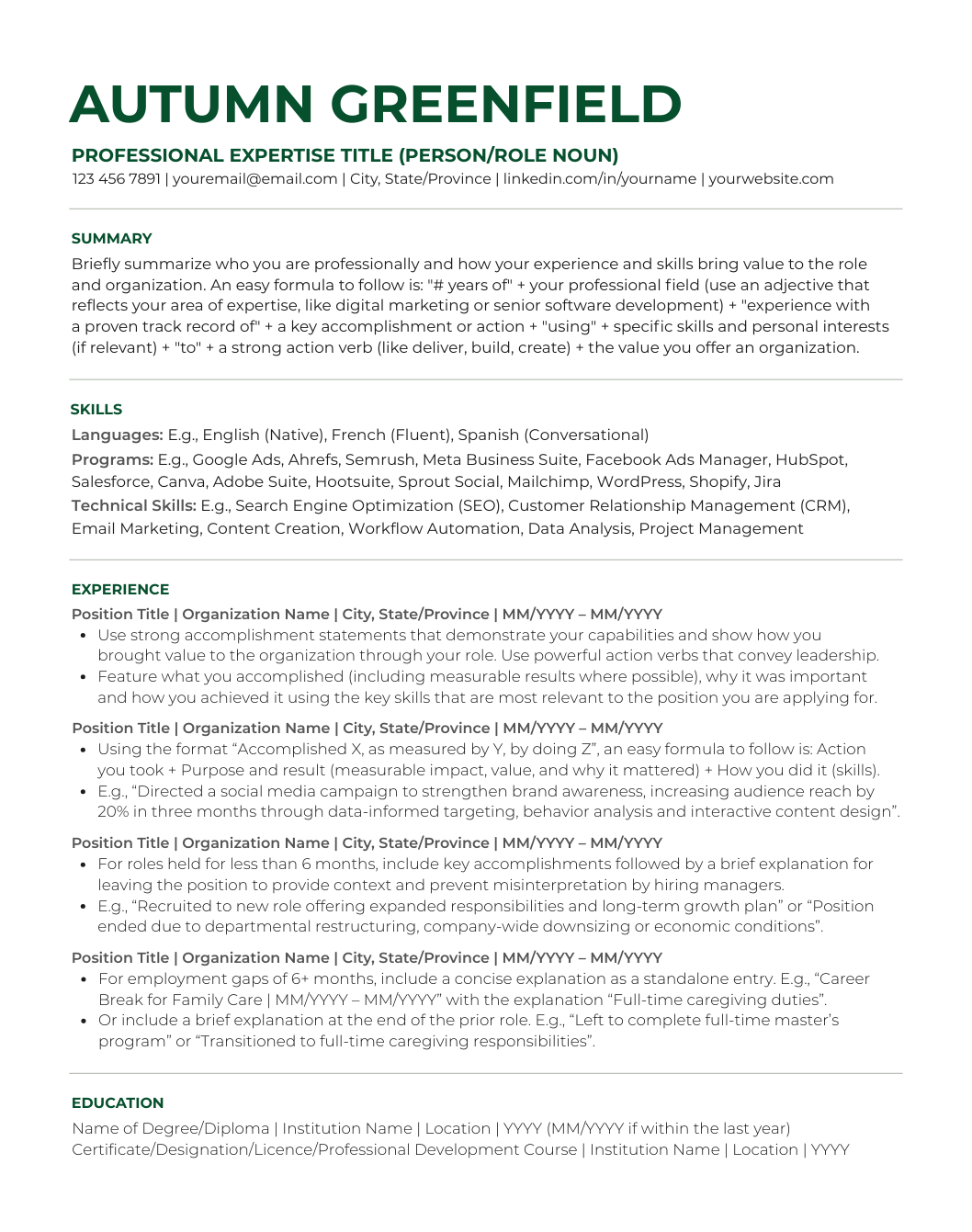
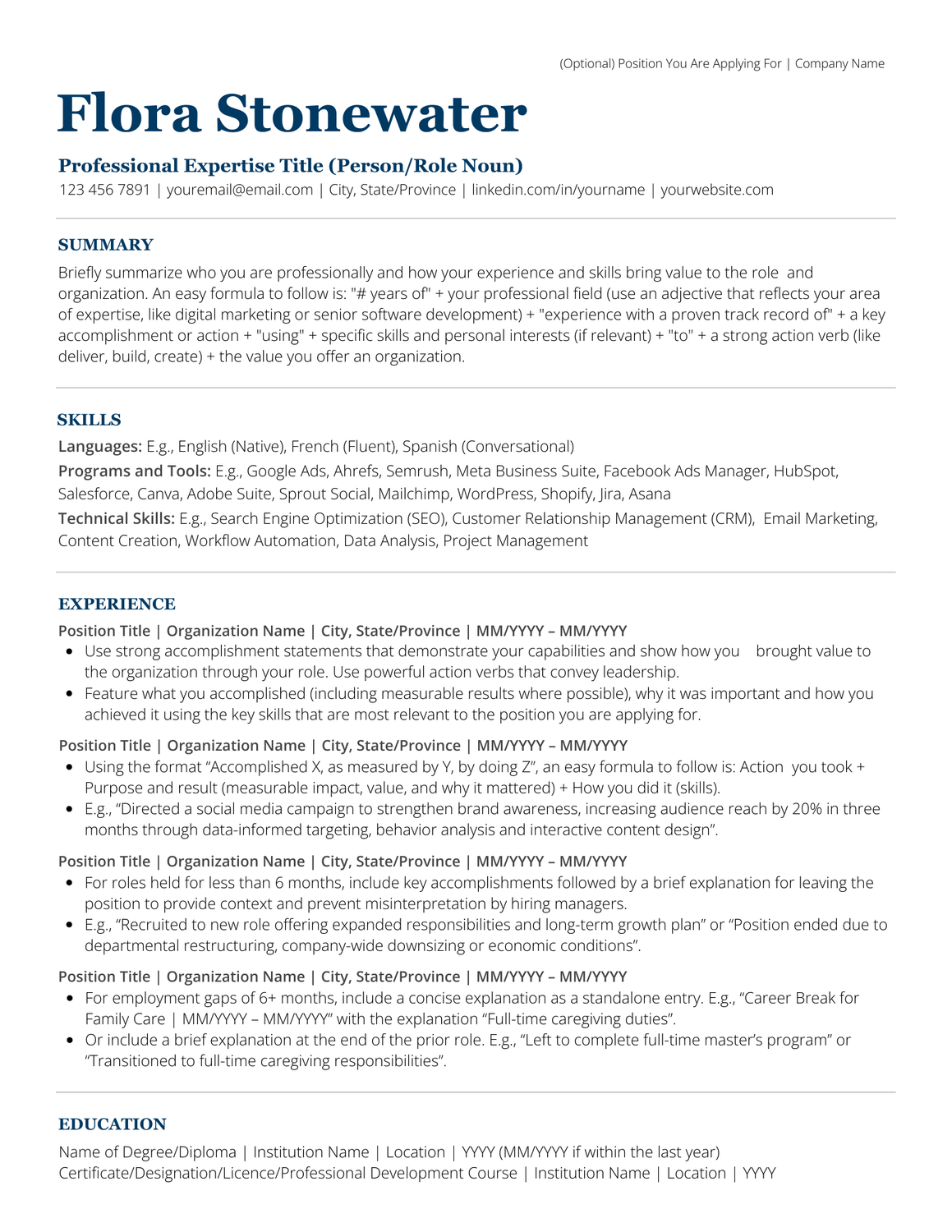
Get an ATS-friendly resume template that makes applying this review's recommendations easier from the start.
$17
HOW THE HIRING
SYSTEM CONSISTENTLY UNDERVALUES WOMEN
A common explanation for gender gaps in hiring is that women "undersell themselves", but the research tells a more nuanced story.
Women are more likely to describe their work accurately compared to men, which is an advantage in a competitive market where evaluators are increasingly seeking trustworthy candidates who can prove what they're capable of. They also emphasize collaboration, facilitation, and people leadership skills on their resumes, qualities that are critical to strong team and organizational performance. Yet gender bias means these strengths are often undervalued in the hiring process.
Women are more likely to describe their work accurately compared to men, which is an advantage in a competitive market where evaluators are increasingly seeking trustworthy candidates who can prove what they're capable of.
They also emphasize collaboration, facilitation, and people leadership skills on their resumes, qualities that are critical to strong team and organizational performance. Yet gender bias means these strengths are often undervalued in the hiring process.
Studies on resume language show that communal and relational framing, words like collaboration, support, facilitation, and shared ownership are systematically undervalued on women's resumes. This plays out in both algorithmic screening and human evaluation, particularly in the early stages where resumes are filtered quickly using heuristics, keywords and standardized signals of "impact".
A 2024 Journal of Business and Psychology study on communal and agentic language revealed that identical experience was perceived as less competent or leadership-oriented when framed communally rather than agentically, even though the substance of the work was unchanged. In other words, the same qualities can be evaluated very differently by hiring systems depending on how they are articulated.
Women are also less likely to claim personal ownership of their results and miss capturing the direct connection between their actions and the outcomes they produced. For example, HR Dive reports that women are significantly less likely than men to frame resume content as achievements, even when their performance is comparable. This presents a further challenge for how hiring systems evaluate women.
Need Help Writing a Resume That Shows How Good You Are?
Even when you are more than qualified, writing a resume that accurately captures your value on your own can be hard and time consuming.
If you want someone to take care of the writing for you, my resume service for women applies a gender-bias aware, evidence-based approach so your value comes through clearly.
WHY ASSERTIVENESS ALONE BACKFIRES
Women who adopt more assertive or self-promotional language face a different penalty as a result of gender bias in the hiring system.
Research summarized by Harvard Business Review shows that women are more likely to be negatively evaluated for displays of confidence or ambition while they are rewarded in men. This creates a narrow corridor women have to navigate: too restrained, and impact disappears; too assertive, and credibility is questioned.
This is why, as noted in this Forbes review, resume advice that simply tells women to “brag more” ignores the real issue. Instead women have to strategically navigate evaluation systems where language is filtered through gendered assumptions about leadership, likability, and competence.
Confident claims without evidence don't hold up any better than underselling does. This means that simply adopting more "assertive" or "confident" language alone doesn't help women navigate bias in the hiring system.
Instead, women need specific language and framing on their resumes that accurately proves their value in ways that hiring systems recognize and is more resilient to bias.
WHY IMPACT-FOCUSED, EVIDENCE-BASED LANGUAGE WORKS
When women frame their experience around impact and achievement, using language that accurately describes their work and connects it to results, it resonates with how hiring systems interpret value and becomes more resilient to the gender bias built into them. This gives women's experience the best possible chance of being evaluated on its actual merit.
Rather than relying on tone or assertive self-claims like "strong leader" or "high performer", impact-focused language grounds experience in tangible value through specific results and scope.
This matters because hiring systems — both human and automated — are trained to look for specific "markers" of success in the form of these results.
When collaborative or relational work especially is explicitly connected to results, it becomes easier for it to be evaluated favourably despite the gender bias, making your value much harder to overlook.
For example, a resume bullet that shows how facilitation improved delivery timelines, or how cross-functional alignment reduced risk, is harder to dismiss than one that simply lists collaboration as a skill without evidence of how it was used to achieve results.
When resumes are built around articulating your impact, decisions, scope and results, it grounds your experience in tangible, specific evidence that hiring systems recognize and gives women the best possible chance of being evaluated on their actual value.
Don't let gender bias affect how your resume is read
By subscribing, you consent to receive messages from Darling Resumes, including the free resource. See our Privacy Policy. Unsubscribe anytime.
IMPACT-FOCUSED LANGUAGE IS THE LEVERAGE YOU NEED TO PROTECT YOURSELF FROM BIAS IN HIRING
You do not need to exaggerate your role, virtue signal, or adopt an inauthentic voice to articulate your impact on your resume.
Grounding your experience in specific results and evidence is more persuasive on its own and supports a calmer, more credible presentation of your value. Research on hiring decisions also shows that evaluators respond more favorably to specific, evidence-based language than to broad, unsubstantiated claims.
Evidence-based language reduces ambiguity and the space for biased inference, because when results are clear, evaluators spend less time guessing and projecting assumptions onto experience that should be evaluated on its actual merit.
This impact-focused approach to articulating your value translates across the entire hiring process, not just on your resume.
For example, in interviews, grounding your stories in specific results builds trustworthiness, and in recruiter conversations, specificity gives decision-makers the language to advocate for you internally. And in networking contexts, clearly articulating your impact helps others accurately remember your work and opens meaningful conversations around the decisions and methods behind it.
A sustained focus on impact and achievement preserves authenticity while increasing value signals. It supports collaborative leadership without diminishing authority. And it helps strong contributions register in systems that were not designed to recognize them by default.
That’s why, in an imperfect hiring system, evidence-based impact messaging is the leverage women need to be hired into the roles they deserve.
WHY I'M BUILDING TOOLS TO HELP WOMEN GET HIRED
I created Darling Resumes for Women to help protect women from the gender bias built into hiring systems and get more of us hired into the roles we deserve.
I developed my unique approach to resume writing for women by using evidence-based, impact-focused framing, and drawing on research on how gender bias plays out in hiring, to make sure women's contributions, leadership, and value come through clearly in language that feels authentic and true to how we actually work.
Systemic change in hiring is necessary and overdue. While we continue the much needed work to address inequities in the workplace, I'm here to help women navigate the system despite the gender-based bias that exists within it today. My goal is to help more women get hired into the roles we deserve and hired and promoted into the leadership positions where we can shape the decisions that affect us all.
Curious How Gender Bias May Be Affecting Your Resume?
The Free Resume Impact Review for Women helps you see where gender bias may be affecting your resume, especially in leadership, collaboration, and complex problem-solving, and shows you how to include evidence of what you actually achieved so your value is hard to overlook and you get the role you deserve.
You get actionable guidance and suggestions that help you make your accomplishments translate clearly in resumes, interviews, networking, and professional conversations, so your value becomes undeniable.
Your free Resume Impact Review includes both:
A sophisticated AI-guided review designed to identify impact, outcomes, and leadership signals you may be underselling, with the benefit of an external, objective review
A practical guide and self-assessment checklist to evaluate how your work experience communicates impact (perfect for those who prefer not to use AI)
Get Your Free Gender-Bias Aware Resume Review
Start Your Free Resume Review Designed Specifically for Women
By subscribing, you consent to receive messages from Darling Resumes, including the free resource. See our Privacy Policy. Unsubscribe anytime.

REFERENCES AND FURTHER READING
The Résumé Mistake Women Make — And How to Fix It. Forbes.
Analysis of how resume advice often fails to account for gendered evaluation and how women’s experience is interpreted in hiring systems.
https://www.forbes.com/sites/kimelsesser/2024/10/15/the-rsum-mistake-women-make-and-how-to-fix-it/
When Words Matter: Communal and Agentic Language on Men’s and Women’s Résumés. ResearchGate.
Research examining how gendered language patterns influence how resumes are evaluated.
Women Undersell Themselves on Résumés, Report Finds. HR Dive.
Summary of research on gender differences in how experience and qualifications are presented in job applications.
https://www.hrdive.com/news/women-undersell-themselves-on-resumes-report-finds/550142/
Why Women Don’t Apply for Jobs Unless They’re 100% Qualified. Harvard Business Review.
Foundational research on confidence, self-assessment, and gendered application behavior in hiring.
https://hbr.org/2014/08/why-women-dont-apply-for-jobs-unless-theyre-100-qualified
Create Your Free Account